Digital Divide 2026: What Families Have to Spend on Digital Education
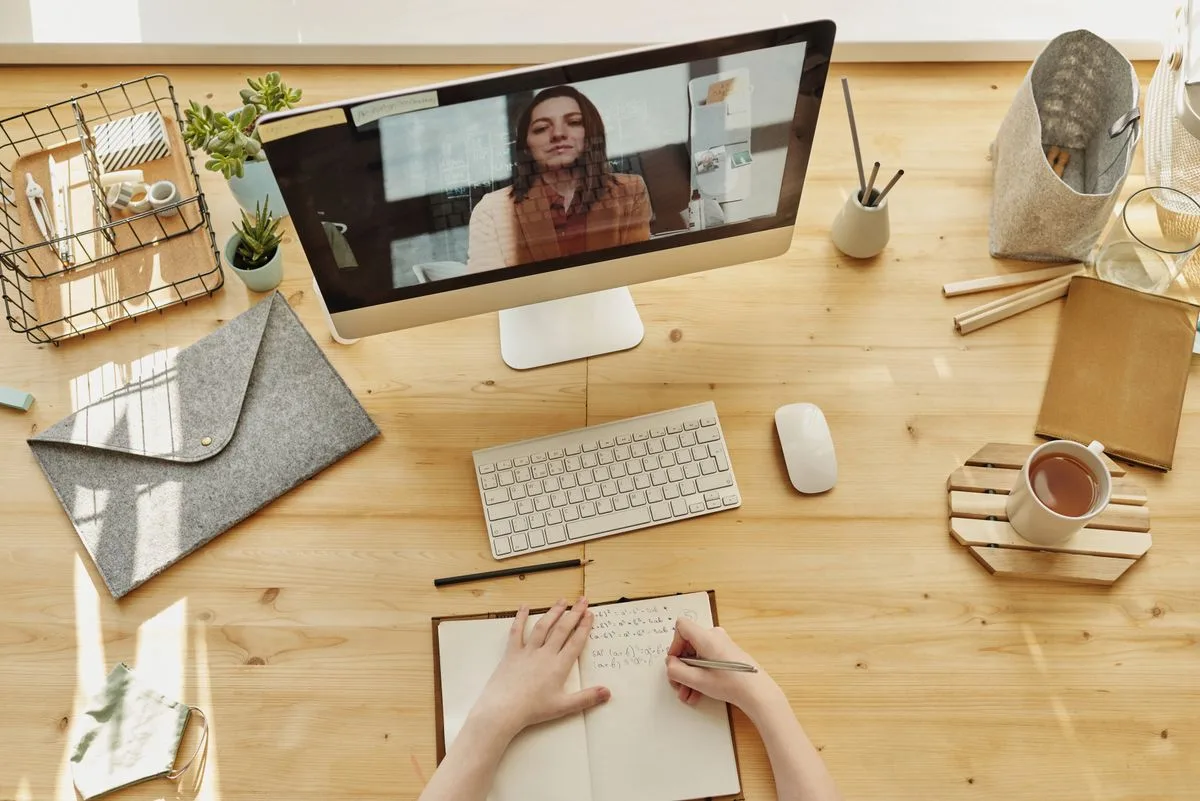
The digitalisation of education is advancing – but who pays the bill? In our exclusive kosten.org Study 2026 we analysed for the first time the actual costs that German families have to bear for their children’s digital education. The result is alarming: depending on school year, spending differs by a good 800 euros a year – and where the school does not provide devices, families bear the biggest item themselves.
The key findings at a glance

📊 Annual cost of digital education per school child
Source: kosten.org analysis 2026 · Average values including a hardware share (depreciation over 3 years)
The differences are considerable: while primary school pupils mainly use free apps such as Anton (10 million users), upper secondary pupils invest in premium learning platforms, powerful laptops and specialised software for preparing for the Abitur (the German school-leaving exam).
Methodology: how we calculated
For our analysis we recorded the typical spending items of German families in five categories and evaluated the costs for the 2025/2026 school year:
- Hardware (tablet/laptop, pro-rata depreciation over 3 years)
- Learning platforms (Sofatutor, simpleclub, Learnattack etc.)
- Internet surcharge (additional need due to home schooling/streaming)
- Software and apps (Office, cloud storage, specialist apps)
- Online tutoring (live tutoring, homework help)
The data is based on an evaluation of current market prices (as of February 2026), publicly available statistics from the Federal Statistical Office and the providers’ price information.
The cost breakdown in detail
Primary school (grades 1–4): 312 €/year
In primary school the digital costs are still manageable – also because many schools now provide tablets and free apps dominate the market.
| Cost item | Monthly | Annual | Note |
|---|---|---|---|
| Tablet (share) | 8.33 € | 100 € | iPad 10th gen., 3 years of use |
| Learning app (Anton Plus) | 4.17 € | 50 € | Annual plan 49.99 € |
| Internet surcharge | 5.00 € | 60 € | Additional need, estimated |
| Protective case and accessories | 1.67 € | 20 € | Case, pen |
| Software | 6.83 € | 82 € | Child protection, cloud |
| Total | 26.00 € | 312 € |
Money-saving tip: the Anton app is completely free in its basic version and covers all core subjects. That is entirely sufficient for most primary school pupils – save the 50 € for Anton Plus if your child does not need offline mode.


Lower secondary (grades 5–7): 589 €/year
From grade 5 the demands rise noticeably: the first presentations require a laptop, and learning platforms become relevant for several subjects.
| Cost item | Monthly | Annual | Note |
|---|---|---|---|
| Laptop (share) | 13.89 € | 167 € | Chromebook 500 €, 3 years |
| Learning platform | 9.99 € | 120 € | simpleclub annual plan |
| Internet surcharge | 8.00 € | 96 € | Higher need |
| Software and cloud | 8.33 € | 100 € | Share of Microsoft 365 Family (129 €/year) |
| Online tutoring | 8.83 € | 106 € | ~4 sessions/year |
| Total | 49.04 € | 589 € |
Money-saving tip: Studyflix offers over 5,000 explainer videos completely free – ideal as a supplement to lessons, with no monthly fees.
Middle secondary (grades 8–10): 847 €/year
Middle secondary is the turning point: more complex topics, exam preparation and the first long-form coursework push costs up noticeably.
| Cost item | Monthly | Annual | Note |
|---|---|---|---|
| Laptop (share) | 16.67 € | 200 € | Mid-range laptop 600 €, 3 years |
| Premium learning platform | 19.95 € | 239 € | Sofatutor 24-month plan |
| Internet surcharge | 10.00 € | 120 € | Video streaming for learning content |
| Software and cloud | 10.00 € | 120 € | Office, specialist software |
| Online tutoring | 14.00 € | 168 € | ~6 sessions/year |
| Total | 70.62 € | 847 € |
Money-saving tip: instead of the expensive Sofatutor monthly plan (39.95 €), the 24-month plan at 19.95 €/month is worthwhile – saving: 480 € over 2 years.
Upper secondary (grades 11–13): 1,124 €/year
Preparing for the Abitur is the most expensive stage of the entire school career: premium learning platforms, powerful hardware and intensive tutoring push spending above 1,100 euros.
| Cost item | Monthly | Annual | Note |
|---|---|---|---|
| Laptop (share) | 22.22 € | 267 € | High-performance laptop 800 €, 3 years |
| Premium learning platform | 23.95 € | 287 € | Sofatutor 12-month plan |
| Internet surcharge | 10.00 € | 120 € | Highest need |
| Software and specialist programs | 12.50 € | 150 € | Office, GeoGebra, MATLAB licences |
| Intensive online tutoring | 25.00 € | 300 € | 10+ sessions/year (Abitur preparation) |
| Total | 93.67 € | 1,124 € |
Money-saving tip: many programs are free for school pupils: GeoGebra is free in general, and many schools provide Microsoft 365 Education via their licence. Ask your school before you buy software.
Regional differences: where the digital divide arises
🗺️ What families' costs depend on
✅ Well equipped
- School authorities with their own loan-device or 1:1 equipment programmes
- State programmes that (partly) fund devices for pupils
- Schools with stable Wi-Fi and centrally provided learning platforms
❌ Need to catch up
- Schools where parents have to buy tablets or laptops themselves (“bring your own device”)
- Rural regions with slow internet roll-out
- School authorities that draw down funding only slowly
Equipment differs not only between federal states but above all between school authorities and individual schools. Ask your school whether loan devices are available.
The consequence: where the school or school authority does not provide devices, the financial burden lies with the families. In our calculation the hardware share alone accounts for 100 to 267 € a year depending on school year – this sum falls away if the school provides a loan device.
Learning platforms compared by cost
Which learning platform is really worth it? We compared five major German providers (prices as of February 2026, Learnattack as of October 2026; the providers rely heavily on changing discount promotions, so check the current price before signing up):
| Platform | Price/month | Target group | Rating | Special feature |
|---|---|---|---|---|
| Sofatutor | from 19.95 € | Grades 1–13 | ⭐ 87/100 | 24/7 homework help |
| simpleclub | from 9.99 € | Grades 7–13, trainees | ⭐ 84/100 | AI study plans |
| Anton | 0 € (Plus is paid, approx. 50 €/year) | Grades 1–10 | ⭐ 82/100 | Free + gamification |
| Studyflix | 0 € | Upper secondary, university | ⭐ 80/100 | 5,000+ videos free |
| Learnattack | regularly from 16.58 € (24 months, often discounted) | Grades 5–13 | ⭐ 76/100 | Duden quality |
💡 Our conclusion: for primary school pupils, Anton (free) is entirely sufficient. From middle secondary onwards, simpleclub is worthwhile as the cheapest premium option. Only for intensive Abitur preparation with chat support is the more expensive Sofatutor justified.
The hidden costs: what many parents overlook
Besides the obvious spending on hardware and apps, there are costs that rarely come up:


1. Electricity and wear
A laptop uses on average 30–50 kWh per year. At current electricity prices (approx. 0.35 €/kWh) that is ~15 € – it sounds small, but adds up with several children.
2. Replacement and repairs
Display and battery damage is not uncommon with school devices. Allow for repair costs of around 180 € per incident – spread over three years that is up to 60 €/year if the device ever has to be repaired. Device insurance or a manufacturer warranty extension can be worthwhile, but also costs money.
3. Printing costs
Despite all the digitalisation, worksheets, flashcards and summaries are still printed. On average 40–80 €/year goes on toner and paper.
4. Internet upgrade
Families with several children of home-schooling age often upgrade their internet plan. The difference between a 50 Mbit/s and a 250 Mbit/s contract is on average 10–15 €/month.


What has to change? Demands on politicians
Our study clearly shows: digital education must not be a luxury good. But reality looks different – especially for low-income families.
The 5 most important demands:
-
Digital education allowance: 200 €/year per school child for digital learning materials – analogous to the school supplies supplement in the education package (Bildungspaket).
-
Free basic learning platform: the federal government should fund a free, data-protection-compliant learning platform for all pupils – as France did with “Ma Classe à la Maison” during school closures.
-
Implement Digitalpakt 2.0 effectively: the first Digitalpakt Schule (2019–2024), the federal–state school digitalisation programme, provided around 6.5 billion euros of federal funds, but the funds were drawn down slowly for years. For Digitalpakt 2.0, the federal government and the states have agreed a total of 5 billion euros up to 2030. The money must reach schools faster and with less red tape.
-
Expand hardware loan programmes: free loan devices for all pupils should become standard nationwide.
-
Tax deductibility: learning platform subscriptions and digital education expenses should be tax-deductible as special expenses.
Conclusion: the digital education gap is widening
The results of our kosten.org Study 2026 are clear: German families spend between 312 € and 1,124 € per year and child on digital education. The financial burden rises with every school year – and hits low-income families particularly hard.
Where school authorities provide devices and licences, costs fall significantly; elsewhere families bear most of them themselves. The digital divide is therefore not only a technological problem but above all a social problem.
It is time for politicians to act – so that parents’ wallets do not decide whether a child has access to digital education.
📥 Cite the study?
Journalists and editorial teams are welcome to cite and link to this study. Please use the following source reference:
URL: https://kosten.org/en/blog/digital-divide-2026
For press enquiries: redaktion@kosten.org
Related articles
Share Trading Costs 2026: All the Fees Investors Need to Know
What does share trading really cost? Custody account fees, order fees, spreads, ETF fees and taxes – the complete cost check for private investors in Germany in 2026.
Read more
ChatGPT Costs 2026: All Prices for Go, Plus, Pro and Business
What does ChatGPT cost in 2026? All subscription models from Free through Go and Plus to Pro, Business and Enterprise compared – plus notes on API prices.
Read more
Amazon Prime Costs 2026: Is the Subscription Still Worth It?
What does Amazon Prime cost in 2026? Prices for monthly and annual plans, discounts for young adults and students, and the video benefits included at a glance.
Read moreNote on affiliate links
This page contains affiliate links. If you buy something through one of these links, we receive a small commission. The price you pay does not change. Learn more