Braces Costs 2026: What Does Health Insurance Pay?
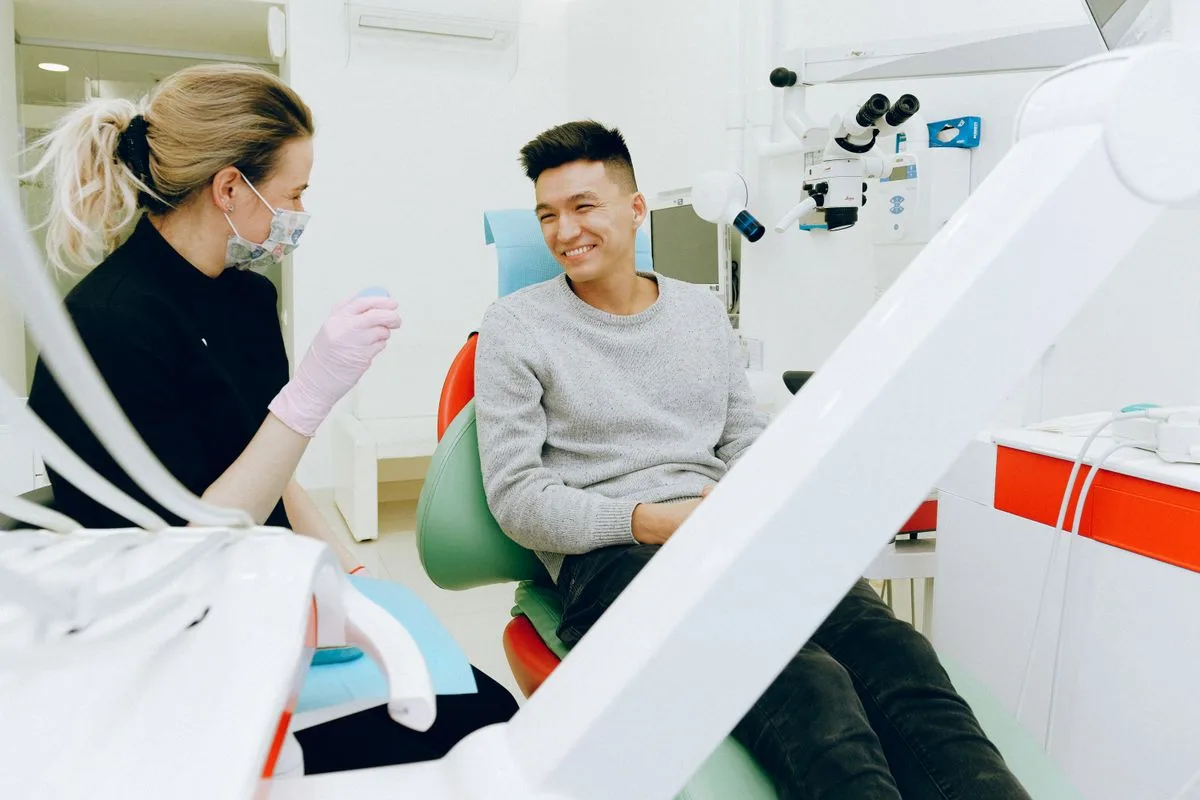
Braces are unavoidable for many children and teenagers – but adults, too, are increasingly choosing to have their teeth straightened. What do braces cost in 2026? And when does health insurance cover the costs? We explain all the prices and the orthodontic indication groups (KIG) and show which alternatives exist.
Braces costs at a glance
| Type of braces | Cost | Covered by statutory insurance? |
|---|---|---|
| Fixed braces (standard) | 1,500–3,000 € | Yes (for KIG 3-5) |
| Fixed braces (ceramic) | 3,000–6,000 € | Partly |
| Removable braces | 500–1,500 € | Yes (for KIG 3-5) |
| Invisalign / aligners | 3,500–8,000 € | No |
| Lingual technique (inside) | 6,000–15,000 € | No |
When does health insurance pay?
Statutory health insurers cover the costs only for children and young people who had not yet turned 18 when treatment began, and only where the misalignment is sufficiently severe (§ 29 SGB V). This is determined by the KIG levels:
Orthodontic indication groups (KIG)
| Level | Severity | Cost coverage |
|---|---|---|
| KIG 1 | Mild | None |
| KIG 2 | Slight | None |
| KIG 3 | Moderate | 80% (20% own share*) |
| KIG 4 | Severe | 80% (20% own share*) |
| KIG 5 | Very severe | 80% (20% own share*) |
*The own share is 20%; if at least two children in the family are in orthodontic treatment at the same time, it falls to 10% for the second and each further child. It is refunded if the treatment has been completed to the medically necessary extent (§ 29 (2) and (3) SGB V).
Important: for adults, statutory health insurance pays ONLY for severe jaw anomalies that require surgery. All other treatments have to be paid for privately.


Additional costs for braces
Even if the basic treatment is covered by the insurer, there are numerous extras that have to be paid for privately:
Typical additional services
- Ceramic instead of metal brackets: +800–1,500 €
- Self-ligating brackets: +500–1,000 €
- Professional teeth cleaning: 80–120 € per session
- Retainer (after treatment): 200–400 €
- Accelerated treatment: +500–2,000 €
Cost trap: many orthodontists recommend expensive extras as standard. Always ask for the pure insurance-funded service!
Invisalign and aligners: the invisible alternative
Transparent dental aligners such as Invisalign are particularly popular with adults:
Aligner prices 2026
| Provider | Cost | Treatment scope |
|---|---|---|
| Invisalign (via orthodontists) | approx. 4,000–8,000 € | Full correction; the practice sets the price |
| Impress (drsmile.de now redirects to Impress) | “Moderate” tier: 99.70 €/month over 48 instalments, 4,785.60 € in total | Mild to moderate cases |
| Smileunion | from 1,790 € one-off payment (“Light” tier) | Mild to complex cases |
Provider prices according to smile2impress.com and smileunion.de, retrieved 30 October 2026. The providers show the prices of higher tiers only in their configurator.
Beware of cheap aligners: start-ups often promise miracles for under 2,000 €. In complex cases, however, they are frequently overwhelmed – and follow-up treatment by an orthodontist becomes expensive.
Braces costs for adults
Adults almost always pay themselves. Costs vary widely:
- Classic fixed braces: 3,000–6,000 €
- Lingual technique (invisible): 8,000–15,000 €
- Invisalign Full: 5,000–8,000 €
- Minor correction (aligners): 1,500–3,000 €
Tip: some private supplementary dental insurance policies cover 50–100% of orthodontic costs for adults – but only if they were taken out BEFORE the diagnosis!
Financing options
Instalment payments at the orthodontist
Most practices offer interest-free instalments over 12–24 months.
Supplementary dental insurance
For children, policies are available from around 10 €/month. How much of the orthodontic costs is reimbursed – for instance for KIG 1–2 or for private extras – depends heavily on the policy and is often limited to maximum amounts. For adults, orthodontic benefits are considerably more expensive to insure, and waiting periods are common.
Tax deductibility
Medically necessary braces costs that you bear yourself can be claimed as extraordinary expenses (§ 33 EStG) – only the part above the reasonable burden threshold has a tax effect. Corrections for purely cosmetic reasons are not deductible.
Money-saving tips for braces
- Get a second opinion: KIG classifications can vary.
- Ask for the insurance-funded service: explicitly ask for basic care without extras.
- Use university clinics: dental clinics often treat more cheaply.
- Treatment abroad: clinics in Poland or Hungary, for example, advertise considerably lower prices – but bear in mind that orthodontic treatment requires regular check-up appointments over months to years.
- Insure early: take out supplementary dental cover before the age of 10!


The process: from application to billing with the insurer
Before treatment starts, the orthodontic practice draws up a treatment plan with a cost estimate. For people with statutory health insurance, this plan is submitted to the insurer, which approves it or has an expert review it. The classification into KIG levels is confirmed there as well. Only once it is approved is it clear whether the basic treatment is covered. Treatment often lasts three to four years; the practice bills the insurer quarterly, and you initially pay the 20 per cent co-payment (10 per cent from the second child), which is refunded after successful completion (section 29 SGB V).
The separation between insured services and extra costs is important. Anything beyond the medically adequate care, such as ceramic brackets, is billed under the dentists’ fee schedule (GOZ) and must be agreed in writing beforehand. Take the agreement home and read it in peace; do not sign on the same day if you are unsure. The standard multiplier under the GOZ is 2.3, and higher factors require a justification.
Worked example: child classified KIG 4
A child is classified KIG 4 and the practice proposes fixed braces with extras. The insurer pays for the basic treatment. Privately you add ceramic brackets (assumed €1,000, within the €800 to €1,500 range given above), self-ligating brackets (€700), eight professional cleanings at €100 each (€800) and a retainer (€300). That makes €2,800 in extra costs, even though the treatment itself would be free of charge medically. Without the extras you would pay nothing in the end, because the co-payment is refunded. The example shows why comparing against pure insured care is important.


Adults, private insurance and second opinions
Adults are only entitled to insured treatment if a severe jaw anomaly exists that has to be treated together with oral surgery (section 28(2) SGB V). Privately insured patients receive reimbursement depending on their tariff; check the coverage commitment in advance because many tariffs have maximum amounts or waiting periods. For high costs, get a second opinion from another specialist orthodontist, since treatment plans and prices can differ considerably. After treatment, plan on wearing the retainer long term, because teeth can otherwise drift back.
What to look for when choosing a practice
Orthodontic treatment is carried out by specialist orthodontists, and the professional title is protected. In the first consultation, ask about the planned duration of treatment, the number of check-ups and the type of appliances. Reputable practices disclose their treatment and cost plan and clearly separate insured services from extras. Also ask how aftercare is organised, since the retainer often has to be worn and checked for years. If you want to change practice, first clarify how quarters that have already been billed are handled, because switching in the middle of treatment can cause extra costs.
Conclusion: the costs you have to expect
- Children (KIG 3-5): basic care free of charge, extras 500–2,000 €
- Children (KIG 1-2): full self-payment 2,000–5,000 €
- Adults (aligners): 2,000–8,000 € depending on complexity
- Adults (fixed braces): 3,000–15,000 €
Braces are an investment in health and aesthetics. Do not let yourself be talked into expensive extras too quickly – insurance-funded care is often entirely sufficient!
Related articles

Share Trading Costs 2026: All the Fees Investors Need to Know
What does share trading really cost? Custody account fees, order fees, spreads, ETF fees and taxes – the complete cost check for private investors in Germany in 2026.
Read more
ChatGPT Costs 2026: All Prices for Go, Plus, Pro and Business
What does ChatGPT cost in 2026? All subscription models from Free through Go and Plus to Pro, Business and Enterprise compared – plus notes on API prices.
Read more
Amazon Prime Costs 2026: Is the Subscription Still Worth It?
What does Amazon Prime cost in 2026? Prices for monthly and annual plans, discounts for young adults and students, and the video benefits included at a glance.
Read moreNote on affiliate links
This page contains affiliate links. If you buy something through one of these links, we receive a small commission. The price you pay does not change. Learn more