Wallbox Costs 2026: Installation, Subsidies and Running Costs
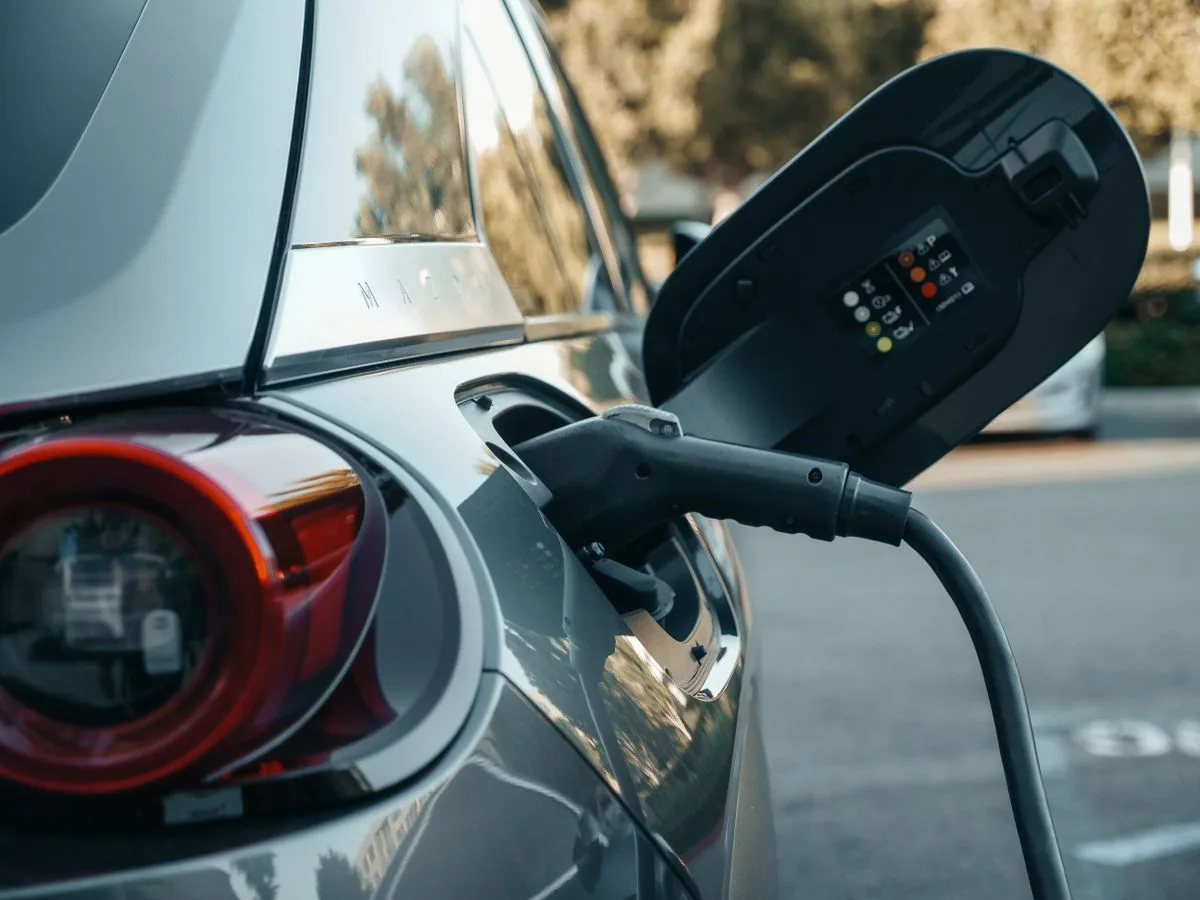
A wallbox of your own is almost indispensable for electric-car owners. But what does a wallbox cost in 2026, including installation? We explain all the cost factors, show current funding options and calculate what charging at home actually costs.
Wallbox costs at a glance
| Cost item | Price range |
|---|---|
| Wallbox (11 kW) | 400–1,500 € |
| Wallbox (22 kW) | 800–2,500 € |
| Installation (standard) | 500–1,500 € |
| Installation (complex) | 1,500–3,000 € |
| Total cost (typical) | 1,000–3,000 € |
The wallbox: what does the unit itself cost?
11 kW wallboxes (standard)
Most households need an 11 kW wallbox:
- Simple models: 400–700 € (e.g. go-eCharger, Heidelberg Home Eco)
- Premium models: 800–1,500 € (e.g. Webasto, ABB, Keba)
With 11 kW you charge about 50–60 km of range per hour – overnight every electric car is full.
22 kW wallboxes
For more intensive use or larger electric cars:
- Price range: 800–2,500 €
- Advantage: double the charging speed
- Disadvantage: requires approval from the grid operator (charging equipment over 12 kVA); many electric cars charge on AC at only 11 kW anyway
Note: even an 11 kW wallbox must be registered with the grid operator before it is put into operation (§ 19 of the Low-Voltage Connection Ordinance, NAV).
Tip: 11 kW is entirely sufficient for 95% of private users!
Installation costs: the biggest uncertainty factor
Installation costs vary widely depending on the structural situation:
Factors for higher costs
- Long cable runs (e.g. garage far from the fuse box)
- Necessary reinforcement of the house connection
- Underground car park instead of carport
- No spare capacity in the fuse box
Typical scenarios
| Situation | Installation costs |
|---|---|
| External wall, short cable run | 500–800 € |
| Garage, 10–15 m cable run | 800–1,500 € |
| Underground car park, long run | 1,500–3,000 € |
| With house connection reinforcement | +2,000–5,000 € |
Important: before buying, get several quotes from qualified electrical contractors!
Subsidies 2026: which programmes are there?
The nationwide KfW subsidy for private charging stations (programme 440, 900 € per charging point) expired in 2021, as did the successor programme 442 for solar power and wallbox. There is currently no comparable federal programme for private wallboxes.
Current funding options
- States and municipalities: individual federal states, cities and municipalities run their own programmes – amount, conditions and duration change often, and budgets are frequently used up quickly
- Reduced grid fees (§ 14a EnWG): wallboxes over 4.2 kW that go into operation from 2024 count as controllable consumption devices. In return for the grid operator being allowed to throttle the output in an emergency, you pay a reduced grid fee – as a flat rate or through a reduced unit price
- Employers: some companies subsidise wallboxes for employees
- Electricity suppliers: local providers offer combination packages with discounted wallboxes
Tip: before buying, check the federal funding database (foerderdatenbank.de) and the offers from your municipality and your grid operator!
Running costs: what does charging at home cost?
Electricity costs per 100 km
| Scenario | Cost per 100 km |
|---|---|
| Normal household electricity (32 ct/kWh) | approx. 5.50–7.00 € |
| Car-electricity tariff (28 ct/kWh) | approx. 4.80–6.00 € |
| With solar power (10 ct/kWh*) | approx. 1.70–2.20 € |
*Self-consumption costs with a paid-off PV system
Annual cost example
At 15,000 km/year and consumption of 18 kWh/100 km:
- Normal electricity price: 15,000 × 0.18 × 0.32 = 864 €/year
- With solar power: 15,000 × 0.18 × 0.10 = 270 €/year
Wallbox vs. ordinary socket
| Charging solution | Charging power | 100 km in… | Recommended? |
|---|---|---|---|
| Household socket | 2.3 kW | ~8 hours | ❌ Emergency only |
| Camping socket (CEE) | 3.7 kW | ~5 hours | ⚠️ Interim solution |
| Wallbox 11 kW | 11 kW | ~1.5 hours | ✅ Standard |
| Wallbox 22 kW | 22 kW | ~45 minutes | ✅ Intensive users |
Warning: regular charging at a household socket can lead to overheating and cable fires!
Wallbox models at a glance
Approximate street prices as a guide, without guarantee – not a ranking.
| Model | Power | Price | Special feature |
|---|---|---|---|
| go-eCharger Gemini flex | 11/22 kW | approx. 700 € | App control, PV surplus |
| Heidelberg Home Eco | 11 kW | approx. 500 € | Cheap, reliable |
| Webasto Live | 11 kW | approx. 800 € | App control |
| Easee Home | 22 kW | approx. 900 € | Scandinavian design |
| ABB Terra AC | 11/22 kW | approx. 1,200 € | Premium, long-lasting |
Money-saving tips for the wallbox
- 11 kW instead of 22 kW: almost always enough for private use.
- Choose a simple model: many premium features go unused.
- Several quotes for installation: prices can vary by 100%.
- Take out a car-electricity tariff: saves 2–4 ct/kWh.
- Combine with a PV system: charging with solar power is unbeatably cheap.
- Check funding: check regional programmes!


Worked example: charging and payback
An electric car with a 60 kWh battery charged from 20 to 80 per cent takes in 36 kWh. At 32 ct/kWh this charge costs €11.52. With an 11 kW wallbox it realistically takes about three and a half hours because of charging losses and the charging curve. Overnight, that is no problem. At 15,000 km a year and 18 kWh per 100 km, the car needs about 2,700 kWh. For illustration, assume public AC charging costs 20 ct/kWh more than household electricity: you then save €540 a year. With total costs of €1,800 for wallbox and installation, the investment pays for itself after a little over three years. The actual premium at public charging points varies widely by operator and tariff, so check it for your region.
Permits, tenants and owners’ associations
Every wallbox has to be registered with the grid operator (section 19 of the Low-Voltage Connection Ordinance, NAV), and charging equipment above 12 kVA needs its approval. The installation may only be carried out by an electrical contractor listed in the grid operator’s register. The contractor also takes care of the protective devices, for example residual-current protection with DC detection (DIN VDE 0100-722), which many wallboxes already have built in.
Tenants and condominium owners have a right to have the landlord or the owners’ association consent to the installation of a charging point (section 554 BGB, section 20(2) of the Condominium Act, WEG). The applicants normally bear the costs, and the association decides on how it is carried out. Submit the request in writing and attach a quotation from the electrical firm. In underground car parks, load management is advisable so that several wallboxes do not overload the mains connection.


Tax, GHG quota and company cars
Anyone who charges a company car at home can have the electricity costs reimbursed by the employer. Tax-free charging at the employer is regulated in section 3 no. 46 of the Income Tax Act (EStG); the rule is currently time-limited, so check the deadline that applies. Private users can also sell the greenhouse gas reduction quota (THG quota) for their electric car. The proceeds vary from year to year and depend on the provider, but they can cover part of the electricity costs. If you own a photovoltaic system, you can choose a wallbox with PV surplus charging, which charges the car mainly with your own electricity.


Checklist before you buy
First check where the parking space is and how far it is from the meter cabinet, since the cable run largely determines the price. Find out whether your house connection has enough spare capacity, and ask for the quotation to list the device, materials, labour and registration with the grid operator separately. Make sure the wallbox suits your car (type 2 plug, single or three-phase), supports load management and offers app connectivity if you want to charge from PV surplus. Compare the warranty period too. Good advice from the electrical firm is worth more than any small discount on the device.
Conclusion: what does a wallbox really cost?
At 1,000 to 2,500 euros total cost (unit + installation), a private charging station is a manageable investment. The convenience of starting every morning with a full battery is priceless – and the running costs are considerably cheaper than public charging or petrol.
Our recommendation: allow 500–700 € for a solid 11 kW wallbox and get three quotes for the installation. How quickly the investment pays off compared with charging at public charging points depends mainly on your mileage, your electricity price and any PV system.
Related articles

Share Trading Costs 2026: All the Fees Investors Need to Know
What does share trading really cost? Custody account fees, order fees, spreads, ETF fees and taxes – the complete cost check for private investors in Germany in 2026.
Read more
ChatGPT Costs 2026: All Prices for Go, Plus, Pro and Business
What does ChatGPT cost in 2026? All subscription models from Free through Go and Plus to Pro, Business and Enterprise compared – plus notes on API prices.
Read more
Amazon Prime Costs 2026: Is the Subscription Still Worth It?
What does Amazon Prime cost in 2026? Prices for monthly and annual plans, discounts for young adults and students, and the video benefits included at a glance.
Read moreNote on affiliate links
This page contains affiliate links. If you buy something through one of these links, we receive a small commission. The price you pay does not change. Learn more